
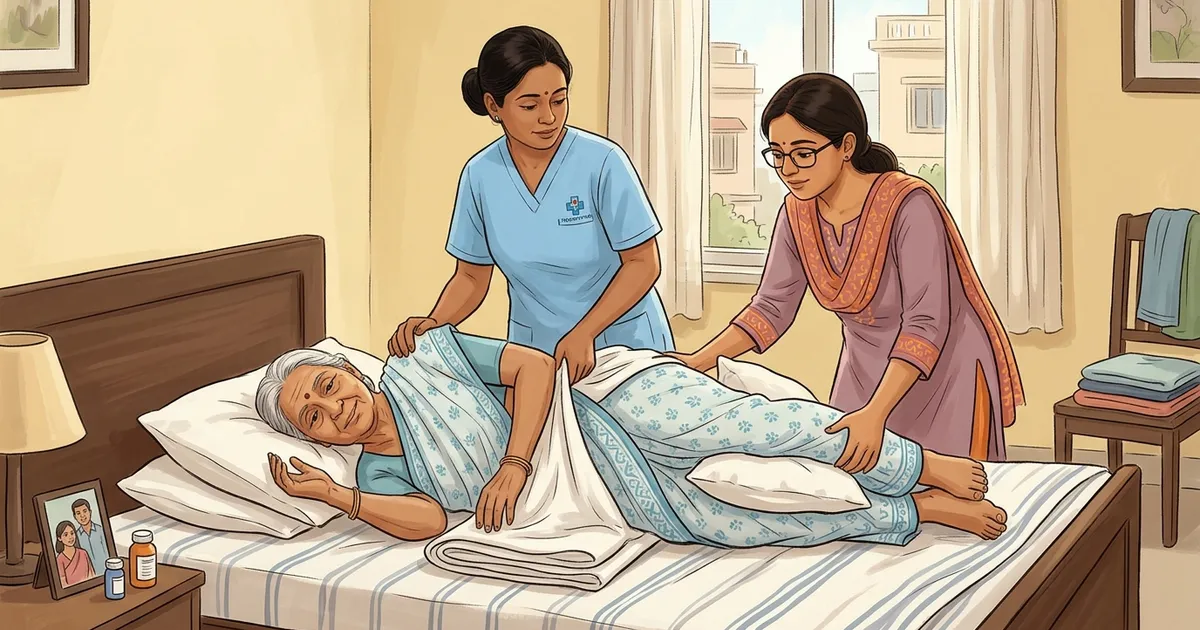
Compassionate and Clinical Bedridden Patient Care in Kolkata#
Caring for an immobile relative at home is an act of deep familial devotion, but it is also one of the most physically demanding and emotionally exhausting responsibilities a family can shoulder. Whether the result of an acute stroke, advanced Parkinson's disease, severe dementia, or terminal illness, prolonged confinement to bed requires disciplined clinical protocols.
Without structured management, prolonged immobility can lead to debilitating complications: severe pressure sores (bedsores), painful joint contractures, aspiration pneumonia, urinary tract infections, and deep vein thrombosis.
Arranging professional bedridden patient care at home Kolkata provides your family with the specialized skills, physical lifting assistance, and clinical vigilance required to maintain hygiene, comfort, and dignified living.
Through Nurses Near Me Patient Care Services in Kolkata, we assist households across Behala, Ballygunge, Salt Lake, and Jadavpur with verified attendants and experienced shift nurses.
The Golden Rule: The Two-Hour Turning Clock#
Constant downward pressure from body weight compresses capillaries against underlying bone, cutting off oxygenated blood to the skin. When tissue remains compressed for more than two hours, cellular necrosis begins:
| Turning Time Interval | Patient Position | Bony Pressure Points Relieved |
|---|---|---|
| 8:00 AM – 10:00 AM | Right Lateral (30-degree tilt with back pillow) | Relieves sacrum, tailbone, and left hip |
| 10:00 AM – 12:00 PM | Supine (Back resting with knee/heel pillow) | Relieves bilateral hip trochanters and ear tissue |
| 12:00 PM – 2:00 PM | Left Lateral (30-degree tilt with back pillow) | Relieves sacrum, tailbone, and right hip |
| 2:00 PM – 4:00 PM | Semi-Fowler (Back elevated 30 degrees) | Promotes lung expansion and meal digestion |
``` Turning Technique Principles:
- Use a soft pull sheet (drawsheet) placed under the torso rather than dragging the patient's skin across bed sheets to avoid frictional shear tears.
- Place a soft pillow between the knees when the patient is on their side to prevent bony knee-on-knee abrasion.
- Keep the patient's heels "floating" by placing a folded towel or pillow under the mid-calves.
```
If your loved one already has an open pressure wound, explore our clinical treatment guide on wound dressing at home in Kolkata.
Daily Hygiene and Meticulous Skin Care#
Moisture from sweat or involuntary incontinence rapidly breaks down fragile skin:
- Daily Bed Sponge Baths: Bathe the patient with warm water and mild, soap-free cleansing lotion. Pay special attention to skin folds (under breasts, groin, and axillae). Thoroughly pat the skin dry—never rub vigorously.
- Immediate Diaper Changes: Change adult diapers promptly after incontinence episodes. Cleanse the perianal area with alcohol-free cleansing wipes.
- Barrier Ointments: Apply a thin layer of zinc oxide or dimethicone barrier cream to the sacrum and buttocks after every cleansing. This creates a waterproof barrier shielding skin from acidic moisture.
- Smooth Bed Linens: Ensure cotton bedsheets are pulled tight and free of wrinkles or crumbs, which create localized pressure ridges.
Nutrition, Hydration, and Aspiration Prevention#
Swallowing reflexes are frequently compromised in neurological and stroke patients, creating significant risks of food entering the lungs:
``` Aspiration Prevention Rules:
- Head Elevation: Never feed a patient lying flat. Always elevate the head of the bed between 30 and 45 degrees.
- Feeding Pace: Offer small spoonfuls of puree or soft diet slowly. Allow the patient to swallow completely before offering the next bite.
- Post-Meal Elevation: Keep the patient upright in the semi-Fowler position for at least 45 minutes after meals or Ryles tube feeds.
- Oral Hygiene: Cleanse teeth, tongue, and gums twice daily with a soft foam swab or gentle brush to reduce oral bacteria that could be aspirated.
```
Recognizing and Preventing Caregiver Burnout#
Family members caring for a bedridden loved one often neglect their own physical and mental well-being:
- Recognizing the Signs: Persistent exhaustion, insomnia, social withdrawal, irritability, and guilt are clear indicators of chronic caregiver burnout.
- Sharing the Burden: Hold a family meeting to divide responsibilities or schedule professional respite care. Bringing in a 12-hour night nurse allows family members to sleep through the night without anxiety. Learn more about 12-hour vs 24-hour nursing care at home in Kolkata.
- Physical Safety During Transfers: Learn ergonomic lifting techniques (bending at the knees, keeping the back straight) to prevent debilitating lower-back disc injuries.
When to Call the Doctor or Seek Immediate Hospital Care#
Immobile patients can develop acute medical complications rapidly:
``` EMERGENCY ESCALATION TRIGGERS:
- Choking, persistent coughing during feeding, or sudden blue discoloration of lips.
- High fever accompanied by productive cough and rapid, labored breathing (Pneumonia signs).
- A newly opened bedsore that exposes subcutaneous fat, muscle, or emits a foul odor.
- Dark, tea-colored urine, blood in the catheter bag, or severe abdominal distension.
- Complete unresponsiveness, sudden confusion, or acute lethargy.
```
Emergency Action: In case of choking, respiratory distress, or severe acute deterioration, dial 112 immediately or transport the patient to the nearest hospital casualty department in Kolkata.
Medical Disclaimer: The clinical practices described in this guide provide supportive educational information. They do not substitute for formal individualized medical directives from your treating physician. Always consult your doctor regarding specific nutritional, turning, and medical needs.