
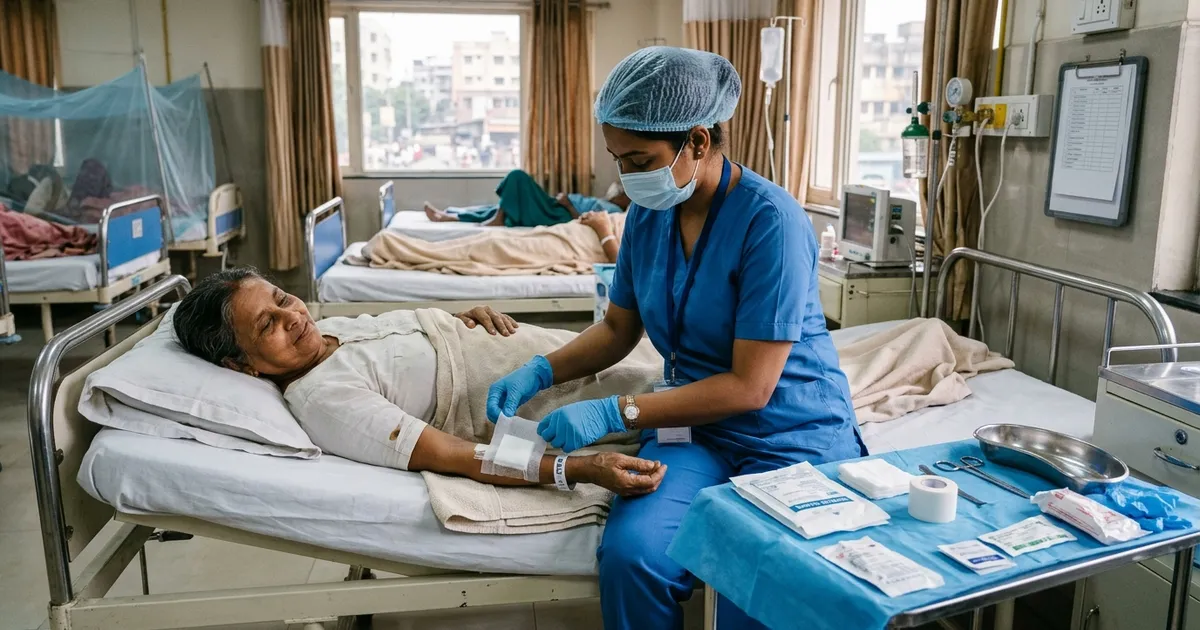
Clinical Wound Dressing at Home in Kolkata#
Discharge from a Kolkata hospital following major surgery, orthopedic repair, or trauma brings relief to families. However, once the patient is home, managing fresh incisions, surgical staples, and exudating incisions can become an acute source of anxiety for family caregivers.
Arranging professional wound dressing at home Kolkata eliminates the discomfort and physical trauma of transporting a recovering patient through bumpy city streets to an outpatient dressing clinic. When you schedule an experienced dressing nurse at home, you ensure that delicate tissue is treated with strict hospital-grade aseptic technique in the comfort of your living room.
Through Nurses Near Me Wound Dressing Service in Kolkata, registered clinicians provide compassionate, hygienic tissue care across all residential wards of Kolkata.
Why Professional Aseptic Cleansing and Bandaging Matters#
The primary goal of post-operative and chronic incision management is preventing Surgical Site Infections (SSI) while creating an optimal micro-environment for tissue granulation:
- Aseptic No-Touch Technique (ANTT): Registered nurses use sterile forceps, sterile field draping, and single-use disposable gloves. Hands never come into direct contact with open tissue or bandage surfaces.
- Normal Saline Irrigation: Open surgical sites should only be cleaned using sterile 0.9% sodium chloride (normal saline) or prescribed antiseptic washes. Harsh household liquids like unbuffered Dettol or raw tap water damage fragile healing cells and delay recovery.
- Exudate Management: Different healing tissues produce varying levels of serous or bloody fluid. Selecting the right modern barrier (such as calcium alginate for heavy drainage or silicone foam for delicate skin) prevents tissue maceration.
To understand how incision care fits into broader convalescence, see our comprehensive guide on post-operative nursing care at home in Kolkata.
Common Types of Wounds Treated at Home#
Visiting clinical teams care for diverse tissue trauma categories across Kolkata:
| Wound Category | Common Clinical Scenario | Recommended Dressing Approach |
|---|---|---|
| Clean Surgical Incisions | Post-abdominal, orthopedic, or cardiac surgery | Sterile dry gauze or waterproof vapor-permeable film |
| Pressure Sores (Bedsores) | Sacral or heel ulcers in immobile, bedridden patients | Debridement assistance, barrier creams & silicone foam |
| Diabetic Foot Ulcers | Chronic neuro-ischemic plantar ulcers | Specialized non-adherent silver antimicrobial dressings |
| Skin Tears & Minor Burns | Fragile geriatric skin tears or superficial burns | Low-adherent tulle gras or sterile petroleum-impregnated gauze |
| Surgical Drain Sites | Jackson-Pratt or corrugated drainage exit sites | Slit-gauze anchoring pads changed under sterile observation |
For immobile relatives at risk of tissue breakdown, consult our preventative guide on bedridden patient care at home in Kolkata.
Critical Warning Signs: When to Seek Immediate Medical Evaluation#
While normal healing involves mild localized tenderness, families must monitor the wound daily for signs of bacterial colonization or mechanical breakdown:
``` WOUND INFECTION WARNING SIGNS:
- Spreading Redness: A perimeter of redness (erythema) extending more than 2 cm beyond the incision margin.
- Purulent Drainage: Yellow, greenish, or cloudy pus leaking from the wound bed.
- Foul Odor: Unpleasant, pungent smell noticeable upon dressing removal.
- Increasing Pain: Throbbing, worsening pain that does not respond to prescribed analgesics.
- Localized Heat: The skin surrounding the wound feels noticeably hotter than surrounding areas.
- Wound Dehiscence: The edges of the surgical incision begin to pull apart or gaping tissue is visible.
- Systemic Fever: Body temperature rising above 38°C (100.4°F), accompanied by chills or shivering.
```
Hospital Escalation Protocol: If wound edges gap open, if active pulsatile bleeding begins, or if a high fever accompanies spreading redness, contact your treating surgeon immediately or proceed to the nearest hospital emergency room. Do not attempt to pack an opening wound with domestic cotton.
Nutritional Foundations for Tissue Granulation and Healing#
Topical clinical dressings protect the exterior tissue, but cellular regeneration depends heavily on systemic nutrition. Operating surgeons in Kolkata emphasize four essential dietary components during recovery:
- High Biological Value Protein: Collagen synthesis and epithelial repair require amino acids. Encourage dal, egg whites, paneer, fish stew, or curd unless contraindicated by renal restrictions.
- Ascorbic Acid (Vitamin C): Essential for cross-linking collagen fibers. Moderate portions of citrus fruits, amla, or guava support immune defense at the surgical margin.
- Zinc and Trace Micronutrients: Trace minerals facilitate cellular enzyme activity during the proliferative healing phase.
- Adequate Hydration: Maintaining blood volume ensures microvascular capillary perfusion carries oxygen directly into healing granulation tissue.
What Supplies to Prepare Before the Clinician Arrives#
Preparing your room simplifies the procedure and maintains sterility:
`` Bedside Preparation Checklist: [ ] 1. Clean Surface: Sanitize a bedside table with disinfectant. [ ] 2. Good Illumination: Have a portable reading lamp or mobile torch ready. [ ] 3. Doctor Prescription: Keep the surgeon discharge note and treatment order accessible. [ ] 4. Prescribed Ointments: Place prescribed topical gels or powders on the table. [ ] 5. Waste Disposal: Keep a small plastic trash bag near the foot of the bed. ``
The visiting registered nurse brings professional surgical instruments, sterile gloves, gauze packs, and medical tapes. For holistic support options, explore our complete home nursing services in Kolkata guide.
Medical Disclaimer: The guidance contained in this article is for educational purposes and should not be used as a standalone guide for self-treating open wounds. Wound care must always follow the precise orders of the operating surgeon or physician.