
The Critical Convalescent Window After Surgery#
Returning home after surgery is an eagerly anticipated milestone for every patient and family. Yet, stepping out of a high-tech hospital into a residential household often triggers unexpected anxiety. Family members suddenly find themselves responsible for managing healing incisions, recording post-operative drain fluid, administering complex medication schedules, and supervising fragile mobility.
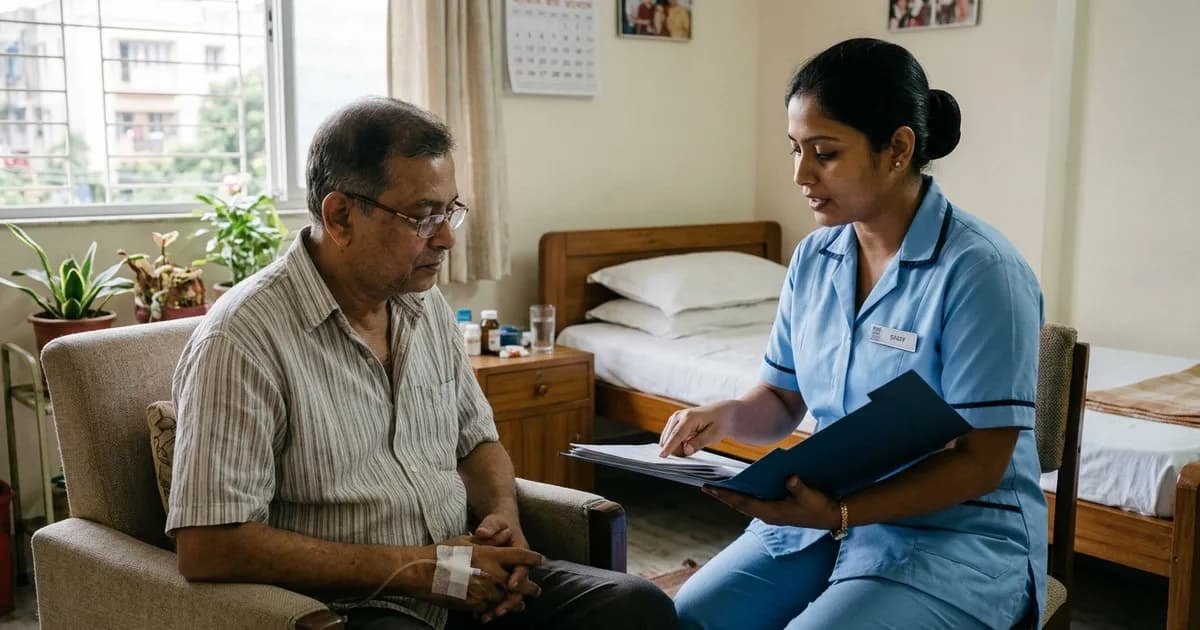
Arranging professional post operative nursing care at home ensures this transition remains safe, structured, and clinically sound. When you engage certified nursing care at home Kolkata, skilled clinicians manage the technical aspects of convalescence, dramatically lowering the risk of emergency readmissions.
Through Nurses Near Me Post-Surgery Care in Kolkata, registered nurses assist patients across Kolkata following orthopedic replacements, cardiac bypass, laparoscopic abdominal procedures, and oncological resections.
Post-Operative Recovery Timeline: Family Action Checklist#
Convalescence evolves in distinct stages. Families can structure home recovery following this clinical timeline:
Stage 1: Days 1 to 2 (Arrival & Immediate Stabilization)#
- Transfer & Positioning: Ensure gentle, assisted transfer from the ambulance or car to the home bed. Support operative limbs with pillows as directed by the surgeon.
- Medication Reconciliation: Cross-check hospital discharge prescriptions against home medicines to prevent accidental duplicate dosing of blood thinners or painkillers.
- Respiratory Spirometry: Encourage deep breathing and incentive spirometer exercises (10 repetitions every waking hour) to expand lung bases and prevent post-anesthesia atelectasis.
- Incision Inspection: Confirm that hospital dressings remain dry and intact without bleeding through.
Stage 2: Days 3 to 5 (Drain Monitoring & Early Ambulation)#
- Drain Measurement: Empty and record output from Jackson-Pratt or Hemovac drains twice daily. Alert the surgeon if output abruptly increases or turns cloudy.
- Assisted Mobilization: Supervise gentle room walking with a walker or cane. Early ambulation stimulates bowel motility and reduces blood clot risks.
- Bowel Management: Monitor for post-anesthesia constipation caused by narcotic analgesics. Encourage hydration and physician-prescribed stool softeners.
Stage 3: Days 6 to 10 (Sterile Dressing & Healing Assessment)#
- First Scheduled Dressing Change: Arrange a clinical visit for sterile dressing changes. Learn about sterile protocols in our wound dressing at home in Kolkata guide.
- Incision Margin Tracking: Inspect suture lines for healthy pink granulation tissue without spreading redness, swelling, or heat.
Stage 4: Days 11 to 14 (Staple Removal & Functional Recovery)#
- Suture/Staple Removal: Once cleared by the surgeon, a registered nurse can safely remove closure staples or non-absorbable sutures using a sterile single-use extractor.
- Transition to Active Therapy: Advance physical therapy exercises under the guidance of a physiotherapist.
| Recovery Milestone | Days 1–3 | Days 4–7 | Days 8–14 |
|---|---|---|---|
| Primary Nursing Focus | Pain control, vitals, DVT prevention | Drain tracking, gentle ambulation | Dressing renewal, staple removal |
| Mobility Level | Bed rest with seated transfers | Short indoor room walking | Independent household ambulation |
| Dressing Status | Factory hospital dressing sealed | First sterile inspection & dressing | Healed incision; sutures removed |
| Dietary Transition | Clear fluids to light soft diet | High-protein healing diet | Normal balanced home nutrition |
Managing Operative Drains and Urinary Catheters Safely#
Post-procedure drains and catheters prevent internal fluid accumulation, but they require sterile vigilance:
``` Surgical Drain Safety Rules:
- Always sanitize hands thoroughly before handling drain bulbs or tubing.
- Never let the drainage port touch contaminated surfaces, bedding, or skin.
- Record fluid quantity in milliliters and describe the color:
- Sanguineous: Fresh red (normal in first 24-48 hours).
- Serosanguineous: Pinkish-watery (normal transition phase).
- Serous: Pale yellow/straw (indicates advanced healing).
- Purulent: Cloudy white, yellow, or greenish (Warning: Infection indicator).
- Re-compress the bulb before sealing the plug to establish active vacuum suction.
```
If your family is coordinating extended care, consider shift options detailed in our guide on 12-hour vs 24-hour nursing care at home in Kolkata.
Preventing Deep Vein Thrombosis (DVT) and Blood Clots#
Prolonged immobility after major surgery slows venous blood flow in the legs, creating risks of dangerous blood clots:
- Ankle Pump Exercises: Move the feet up and down at the ankle joint 20 times every hour while awake. This activates calf muscle pumps that propel blood back toward the heart.
- Anti-Embolism Stockings: Ensure prescribed compression stockings fit snugly without rolling down at the knee, which could act as a tourniquet.
- Prescribed Blood Thinners: Administer prescribed low-molecular-weight heparin or oral anticoagulants at the exact time ordered by your surgeon.
- Hydration: Encourage regular intake of water and clear broths to prevent hemoconcentration.
Red Flag Symptoms: When to Call the Hospital Immediately#
Never ignore clinical warning signs during post-operative recovery:
``` POST-SURGICAL EMERGENCY ESCALATION:
- Acute shortness of breath, sudden chest pain, or coughing up blood (Pulmonary Embolism signs).
- Unilateral calf pain, tenderness, warmth, or noticeable swelling in one leg (DVT signs).
- High fever exceeding 38°C (100.4°F) with shivering and shaking chills.
- Active arterial bleeding soaking rapidly through the outer dressing.
- Surgical wound edges gaping open (wound dehiscence) or internal tissue visible.
- Complete inability to urinate for more than 6-8 hours post-catheter removal.
```
Emergency Action: In the event of acute chest pain, severe breathlessness, or uncontrolled bleeding, dial 112 immediately or summon your nearest Kolkata hospital emergency ambulance. Do not wait for home clinical visits.
Medical Disclaimer: This checklist is intended for general patient convalescent education and family orientation. It does not replace individualized post-operative instructions given by your operating surgeon. Always consult your surgeon before modifying any recovery routine.