
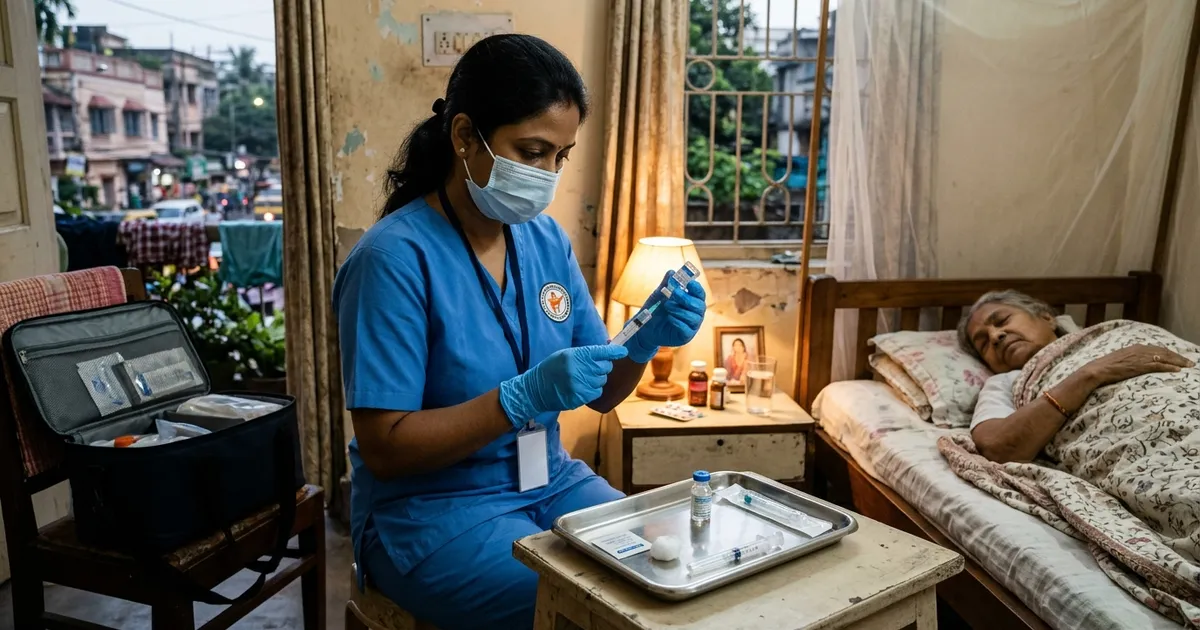
Safe Administration of an Injection at Home in Kolkata#
Receiving an injection at home Kolkata offers immense comfort to elderly patients, post-surgical convalescents, and bedridden individuals who cannot easily travel to a diagnostic clinic or hospital OPD. Rather than enduring congested Kolkata traffic and long clinic queues, a licensed clinician visits the patient residence to administer the prescribed dose safely.
However, parenteral injections breach the body protective skin barrier. When you book a nurse for injection at home, patient safety depends strictly on following clinical governance, verified doctor prescriptions, and sterile single-use techniques.
Through Nurses Near Me Injection Service in Kolkata, families receive prompt visits from credentialed nursing professionals who follow standardized aseptic protocols across all Kolkata districts.
Mandatory Doctor Prescription Rules#
In India, administration of parenteral drugs is regulated under medical governance laws. A registered nurse cannot administer an injection based on oral requests, old prescriptions, or over-the-counter advice:
- Doctor Identification: The prescription must show the treating physician full name, medical qualification, clinic/hospital stamp, and State Medical Council or National Medical Commission registration number.
- Patient Specifics: The document must clearly state the patient full name, age, and consultation date.
- Parenteral Specifics: The medicine name, dosage unit, frequency, and exact anatomical route (Intramuscular, Subcutaneous, or Intravenous) must be documented in writing.
- Validity Window: Acute antibiotic courses or pain injections must be dated recently. Chronic maintenance injections (such as monthly vitamin support or hormone therapy) require valid periodic re-authorization.
If your doctor instructions are ambiguous, the visiting nurse will pause and request written clarification before proceeding.
Permitted vs Prohibited Injections at Home#
For patient protection, clinical visiting services follow clear boundaries on what can and cannot be safely administered in residential environments:
| Clinical Category | Permitted at Home | Strictly Prohibited at Home |
|---|---|---|
| Routine Vitamins & Minerals | Prescribed Vitamin B12, Vitamin D3, Iron (selected formulations) | Unprescribed high-dose infusions |
| Pain Relief & Anti-emetics | Post-surgical analgesics & anti-nausea shots under written order | Unmonitored narcotic infusions or epidural blocks |
| Insulin & Anticoagulants | Subcutaneous heparin/insulin administration support | Uncalibrated, experimental diabetic dosing |
| Antibiotic Therapy | Continuation doses of proven tolerated antibiotics | First-dose antibiotic trials with anaphylaxis risk |
| High-Risk Oncology | Strictly Prohibited | Intravenous chemotherapy & cytotoxic treatments |
| Blood Products | Strictly Prohibited | Whole blood, packed red cells, or platelet transfusions |
Critical Safety Principle: Any medication carrying a significant risk of sudden respiratory distress or acute anaphylactic shock must be administered within a hospital casualty or day-care center equipped with full emergency resuscitation crash carts.
The "Five Rights" Clinical Protocol#
Every qualified professional nurse at home Kolkata follows the internationally recognized Five Rights of medication safety:
``` The 5 Rights Safety Verification:
- Right Patient: Cross-checking patient identity against the prescription paperwork.
- Right Medication: Checking the vial or ampoule label twice against written orders.
- Right Dose: Ensuring the exact prescribed quantity is drawn without error.
- Right Route: Confirming whether the drug is formulated for IM, SC, or IV push.
- Right Time: Administering according to the scheduled interval prescribed by the doctor.
```
In addition to the Five Rights, the nurse inspects the drug expiration date, verifies clarity of the liquid (checking for unauthorized cloudiness or precipitation), and reviews the container seal.
Preserving Cold Chain Integrity for Domestic Biologics and Insulin#
Certain injectables—including insulin, erythropoietin, teriparatide, and specific specialized vaccines—are heat-sensitive biological compounds. Maintaining strict temperature control between 2°C and 8°C is vital to prevent protein degradation:
- Central Shelf Placement: Store vials in the middle tier of your household refrigerator where temperature remains most consistent. Avoid refrigerator door pockets, which experience constant thermal fluctuations when opened.
- Avoid Direct Freezing: Never place injectable medications in the freezer compartment. Frozen or thawed vials lose their molecular efficacy and must be discarded immediately.
- Travel Cooler Packs: When transporting medications home from the pharmacy, use an insulated cooling pouch with gel ice packs to shield ampoules from Kolkata humid summer warmth.
What Families Must Prepare Before the Clinician Arrives#
To ensure a smooth, hygienic appointment, prepare your residence setting with these simple steps:
- Store Medicine Correctly: Keep refrigerated vials in the main cooling compartment as instructed. Do not leave ampoules exposed on warm countertops.
- Set Up a Clean Table: Wipe a firm bedside table with a household antiseptic wipe to create an uncluttered workspace.
- Hand Washing Station: Ensure the bathroom has clean running water, antibacterial handwash, and fresh paper towels.
- Patient Comfort: Help the individual into loose, comfortable clothing that allows easy access to the upper arm (deltoid), upper thigh, or gluteal area depending on the injection type.
- Keep Waste Bins Accessible: A small plastic bag should be ready for non-sharp waste such as alcohol swab wrappers and dry cotton balls. The visiting professional will dispose of needles into a dedicated puncture-proof container.
Recognizing Allergic Reactions and When to Call for Emergency Help#
While serious adverse reactions to previously tolerated maintenance medicines are rare, families must remain vigilant following any injection:
``` SIGNS OF ADVERSE REACTION:
- Generalized hives, severe skin itching, or sudden rash spreading across the body.
- Swelling of the lips, tongue, throat, or facial tissue.
- Wheezing, acute chest tightness, or difficulty drawing breath.
- Sudden dizziness, pallor, cold sweating, or loss of balance.
```
Immediate Emergency Protocol: If severe breathlessness, lip swelling, or unresponsiveness occurs, immediately dial 112 or contact the nearest Kolkata hospital casualty ambulance. Do not attempt domestic remedies. Transport the individual to an emergency medical department right away.
Medical Disclaimer: This guide is prepared for general informational and educational reference. It does not provide medical dosing advice, clinical diagnosis, or pharmaceutical substitution. Injections must only be given under the direct supervision of a licensed doctor prescription.