
- 1. What is PPM dressing?
- 2. Who needs it and when?
- 3. Can it be done at home?
- 4. What does the nurse do during a visit?
- 5. How much does it cost in Kolkata?
- 6. How to book in 4 simple steps
- 7. Kolkata localities and zones we serve
- 8. Safety and when to call a doctor or 112
- 9. Home dressing vs hospital visit comparison
- 10. Frequently Asked Questions
- 11. Related healthcare services
What is PPM dressing?
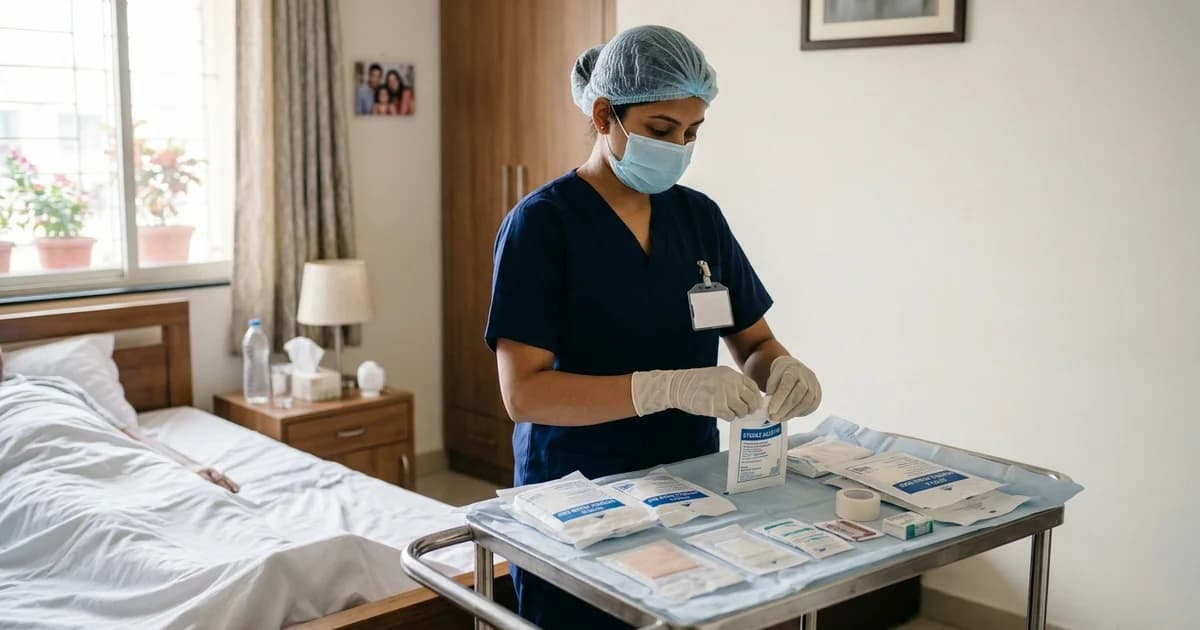
A Permanent Pacemaker (PPM) is a small battery-powered medical device implanted beneath the skin, typically just below the collarbone (sub-clavicular pocket), to help manage irregular, slow, or erratic heartbeats (arrhythmias). The surgical procedure creates a skin incision that closes over the pacemaker generator and delicate lead wires routed into the heart chambers.
Because foreign medical hardware resides just millimeters below the skin surface, post-operative wound care is exceptionally critical. PPM (permanent pacemaker) dressing is performed to safeguard this delicate pocket from environmental contamination, prevent bacterial colonization, monitor healthy tissue apposition, and maintain a sterile, dry environment that encourages natural surgical healing without infection.
Who needs PPM dressing at home and when?
Following hospital discharge, convalescing cardiac patients—many of whom are elderly, frail, or managing concurrent hypertension and diabetes—face difficulty traveling back to hospital dressing rooms. Home dressing is essential in situations including:
- Post-hospital discharge convalescence: Patients discharged within 24 to 48 hours of pacemaker implantation who require scheduled antiseptic wound inspections.
- Senior citizens with limited mobility: Elderly individuals for whom automobile travel, hospital stairs, and sitting in crowded waiting halls cause acute exhaustion and joint pain.
- Patients advised alternate-day dressing: When the cardiac surgeon discharge protocol mandates dressing changes every 48 hours until wound maturity.
- Moisture or staining of original dressing: If the initial hospital pressure bandage becomes loosened, moist from perspiration, or lightly blood-stained, requiring sterile replacement.
- Doctor-ordered suture or staple inspection: Evaluation of the surgical suture line prior to scheduled stitch removal at post-op day 10 to 14.
Can PPM dressing safely be done at home?
Clinical home dressing removes the hazards of hospital-acquired cross-infections, which are particularly hazardous for cardiac device recipients. However, clinical safety rules must be strictly respected:
Doctor-Directed Scope: Nurses Near Me personnel operate strictly as an extension of your doctor’s discharge plan. Visiting nurses follow the operating surgeon’s written orders to the letter. We do not determine whether a dressing is clinically indicated, do not alter prescribed wound care regimens, do not touch or reprogram the pacemaker generator, and never replace scheduled clinical consultations with your cardiology team.
Family Caregiver Boundaries: While family members can assist with general patient comfort, family caregivers should never attempt to remove surgical tape, apply homemade herbal ointments, or dress a pacemaker pocket incision themselves. Accidental contamination of the sub-clavicular pocket can lead to pocket infection or endocarditis, requiring surgical device extraction.
What does the nurse do during a PPM dressing visit?
Our registered nurses follow a systematic, 5-stage clinical workflow during every PPM (permanent pacemaker) dressing appointment:
Clinical Preparation
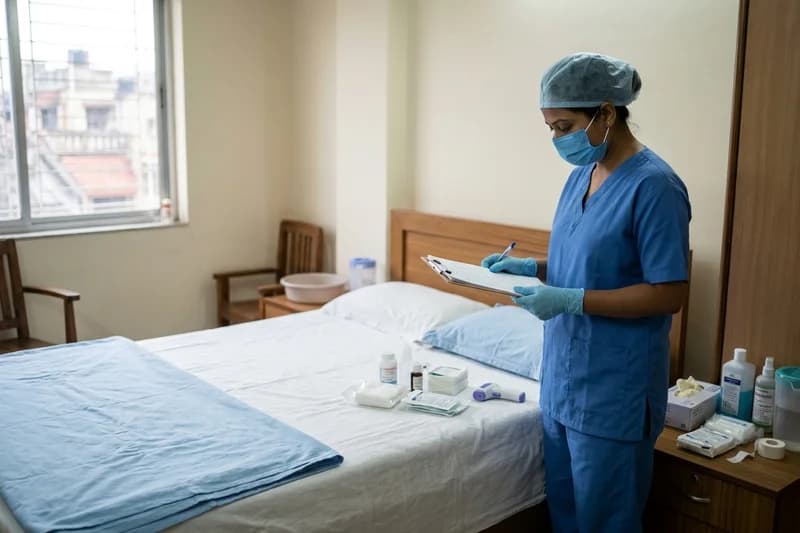
The nurse reviews the surgeon discharge summary, washes hands thoroughly following WHO multi-step protocols, and sets up a clean, sterile workspace using disposable sterile drapes.
Gentle Removal & Inspection
The old bandage is gently loosened without pulling on sutures. The nurse carefully evaluates the pocket site for hematoma (blood collection), erythema (redness), swelling, or discharge.
Aseptic Cleansing
Using sterile forceps and non-touch technique, the nurse cleans the incision line from center outward with sterile medical saline or doctor-ordered antiseptic solution.
Sterile Island Dressing
A hospital-grade, breathable, non-adherent surgical island dressing is placed over the site to safeguard the pacemaker pocket against external contamination and dust.
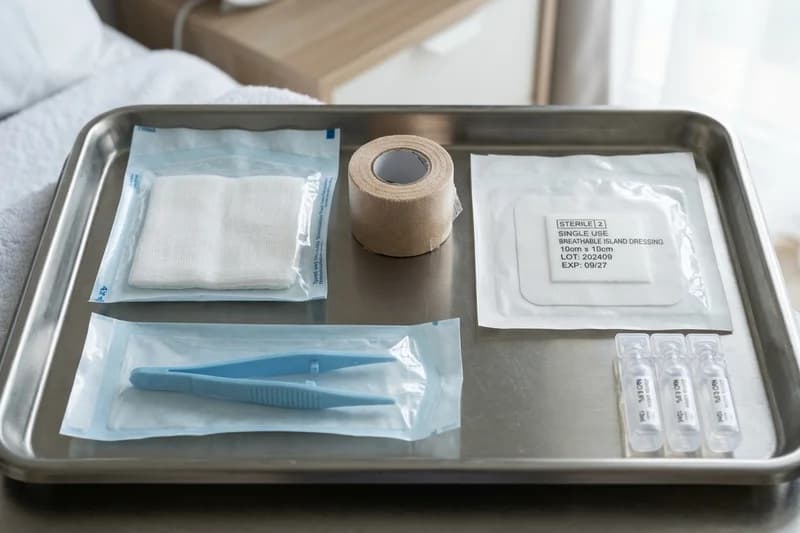
Post-Procedure Documentation & Advice: Finally, the nurse documents the incision’s visual appearance, records patient vitals if requested, and reminds the patient and family to keep the dressing completely dry while showering, avoid lifting the arm on the pacemaker side above shoulder level, and adhere strictly to all oral medications prescribed by the cardiologist.
How much does PPM dressing cost in Kolkata?
At Nurses Near Me, we maintain strict pricing integrity across all Kolkata zones. Domiciliary healthcare should be transparent, predictable, and devoid of hidden surcharges. Our confirmed service charges are:
- Doorstep visit by a state-registered nurse (GNM / B.Sc) verified by the West Bengal Nursing Council (WBNC).
- Pre-procedure hand hygiene and strict Aseptic Non-Touch Technique (ANTT) protocol.
- Careful removal and inspection of the existing surgical dressing.
- Visual evaluation of the pacemaker generator pocket and incision margins for signs of complications.
- Sterile wound cleansing with medical-grade saline or doctor-prescribed antiseptic solution.
- Application of sterile non-adherent surgical island dressing.
- Clinical documentation of incision appearance, healing progress, and caregiver instructions.
- —Doctor or cardiologist physical examination or prescription issuance.
- —Pacemaker device interrogation, electrical parameter checks, or programming.
- —Oral medications, intravenous antibiotics, or prescription ointments (to be provided by patient).
- —Emergency medical intervention (in acute cardiac distress, call 112 or visit nearest hospital casualty).
* Transparent pricing note: Standard travel policy applies across Kolkata municipal limits. For distant suburban localities, any applicable transit surcharge is communicated prior to booking confirmation.
How to book a PPM dressing nurse in Kolkata in 4 steps
Share Doctor’s Advice
Call our Kolkata care team at +91 7005366496 or message via WhatsApp with a photo of the cardiologist discharge summary or post-operative wound care instructions.
Select Date & Slot
Choose a convenient arrival window between 8:00 AM and 8:00 PM IST. We coordinate appointments around your medication schedule and family availability.
Nurse Dispatch
A council-registered nurse verified by the West Bengal Nursing Council (WBNC) is assigned and arrives equipped with a sterile single-use surgical dressing kit.
Sterile Care & Sign-off
The nurse completes the dressing change, notes incision progress, provides family instructions, and signs off the visit at the confirmed tariff of Rs 1,500.
Areas we serve in Kolkata (localities and zones)
To ensure dedicated regional dispatch, we organize our Kolkata home nursing network into 6 distinct service zones. Explore your neighborhood zone below for local dispatch details, hospital corridors, and verified PIN codes:
North Kolkata
Key Localities: Dum Dum, Baranagar, Shyambazar, Belgachia, Sinthee, Cossipore and surrounding wards.
View North Kolkata Service DetailsCentral Kolkata
Key Localities: Park Street, Esplanade, Bowbazar, Entally, Park Circus, Beliaghata and surrounding wards.
View Central Kolkata Service DetailsSouth Kolkata
Key Localities: Ballygunge, Gariahat, Alipore, New Alipore, Bhowanipore, Kalighat and surrounding wards.
View South Kolkata Service DetailsSouth-West Kolkata (Behala side)
Key Localities: Behala Chowrasta, Taratala, Sakher Bazar, Barisha, Thakurpukur, Sarsuna and surrounding wards.
View South-West (Behala) Service DetailsSalt Lake & New Town (East / IT Corridor)
Key Localities: Salt Lake Sector I, Salt Lake Sector II, Salt Lake Sector III, Salt Lake Sector V, New Town Action Area I, New Town Action Area II and surrounding wards.
View Salt Lake & New Town Service DetailsHowrah Side & Riverbank
Key Localities: Howrah Station area, Shibpur, Mandirtala, Garden Reach, Kidderpore, Metiabruz.
View Howrah Side Service DetailsCritical safety rules and when to contact the doctor or call 112
Because a permanent pacemaker is an implanted foreign body with intracardiac connections, an infection along the incision track or inside the generator pocket is a medical priority. Authoritative guidance from the NHS and the British Heart Foundation emphasizes that patients and families must watch for warning signs daily.
- Spreading Redness (Erythema): Redness expanding outward from the incision margins or over the pacemaker pocket.
- Swelling or Fluid Bulge: Progressive swelling, tension, or a squishy fluid sensation around the device pocket.
- Warmth & Tenderness: The skin feels unusually hot to the touch or pain intensifies days after the procedure.
- Discharge or Pus: Yellowish, cloudy, or foul-smelling fluid weeping through the suture line.
- Persistent Bleeding: Active blood seeping through the dressing that does not stop with light, gentle pressure.
- Fever & Chills: Body temperature rising above 100.4°F (38°C) or experiencing unexplained rigors.
- Wound Gaping (Dehiscence): Edges of the skin incision pulling apart or device hardware becoming visible.
If the patient experiences any of the following acute symptoms, do NOT wait for a dressing visit. Call national emergency services (112) or transfer the patient to the nearest cardiac emergency department immediately:
- Fainting, syncope, or sudden loss of consciousness.
- Acute crushing chest pain, tightness, or pressure.
- Severe, sudden shortness of breath or inability to breathe lying down.
- Rapid, pounding palpitations or feeling the pulse racing uncontrollably.
- Twitching or involuntary muscle contractions in the chest or abdominal wall.
- NHS UK — Pacemaker Implantation: Recovery & Wound CareAuthoritative patient guidance on keeping the pacemaker wound dry and watching for infection signs.
- British Heart Foundation — Pacemakers Information & SupportGuidance on recovery at home, wound healing after pacemaker surgery, and warning signs.
- NHS UK — Guide to Surgical Wounds & Dressing ChangesClinical principles of surgical wound care, clean dressings, and red flag symptoms.
Comparison: PPM dressing at home vs hospital or clinic OPD visit
| Aspect | PPM Dressing at Home | Hospital / Clinic OPD Visit |
|---|---|---|
| Travel Strain | Zero travel. Patient rests comfortably in bed without road vibrations. | High strain traveling across Kolkata traffic, climbing stairs, or hailing cabs. |
| Infection Exposure | Protected home environment; no contact with other infected hospital patients. | Exposure to respiratory viruses and hospital pathogens in waiting rooms. |
| Waiting Time | Punctual arrival during confirmed morning or afternoon slot. | 30 to 90 minutes waiting in OPD corridors or dressing room lines. |
| Elderly Patient Comfort | Dignified, relaxed bedside care with family members present. | Exhausting wheel-chair transfers and prolonged upright sitting. |
| Total Cost Factors | Transparent Rs 1,500 visit fee including sterile supplies pack. | OPD registration fee + dressing materials + round-trip cab or ambulance fares. |
Frequently Asked Questions about PPM dressing in Kolkata
How much does PPM dressing cost in Kolkata?
PPM dressing at home costs Rs 1,500 per visit through Nurses Near Me in Kolkata, compared to a standard hospital list price (MRP) of Rs 2,500. This fixed tariff includes the visiting nurse fee, pre-procedure clinical evaluation, and sterile disposable surgical dressing materials.
Can PPM dressing safely be done at home?
Yes, PPM (permanent pacemaker) dressing can safely be performed at home when carried out by a qualified registered nurse strictly following the written instructions of the patient’s treating cardiologist or cardiac surgeon, using hospital-grade sterile non-touch technique.
Who can do pacemaker wound dressing at home?
Only state-registered nursing professionals (GNM or B.Sc Nursing) credentialed with the West Bengal Nursing Council (WBNC) should perform pacemaker site dressings. Lay caregivers or domestic attendants should never attempt to dress or clean an incision over an implanted cardiac device.
How often is a pacemaker wound dressed after surgery?
Dressing frequency is determined strictly by the operating cardiac team’s discharge orders. In most uncomplicated cases, surgical incisions are inspected and dressed every 48 to 72 hours until the wound is dry and healing, or until sutures or clips are removed.
Do I need a doctor’s prescription to book a PPM dressing nurse?
Yes. Because an implanted pacemaker involves a specialized sub-clavicular surgical pocket, our care coordinators require a recent hospital discharge summary or written cardiologist note detailing post-operative wound care instructions prior to nurse dispatch.
Does the visiting nurse check or program the pacemaker device?
No. Our nurses provide clinical surgical wound dressing and incision monitoring only. Device interrogation, pacing threshold testing, and battery programming are medical procedures conducted exclusively by your cardiologist during scheduled hospital follow-up visits.
What supplies should the patient keep ready before the nurse arrives?
Patients should have their hospital discharge card ready, any doctor-prescribed antibiotic ointments, a clean well-lit room, and a cleared bedside table. Our visiting nurse brings all single-use sterile supplies, including antiseptic wipes, sterile gloves, and island dressings.
When to call a doctor after pacemaker surgery?
Contact your treating cardiac surgical team immediately if you observe spreading redness around the incision, swelling, warmth, yellow pus, fresh bleeding, fever above 100.4°F, or wound opening. For fainting, chest pain, palpitations, or shortness of breath, call 112 immediately.